
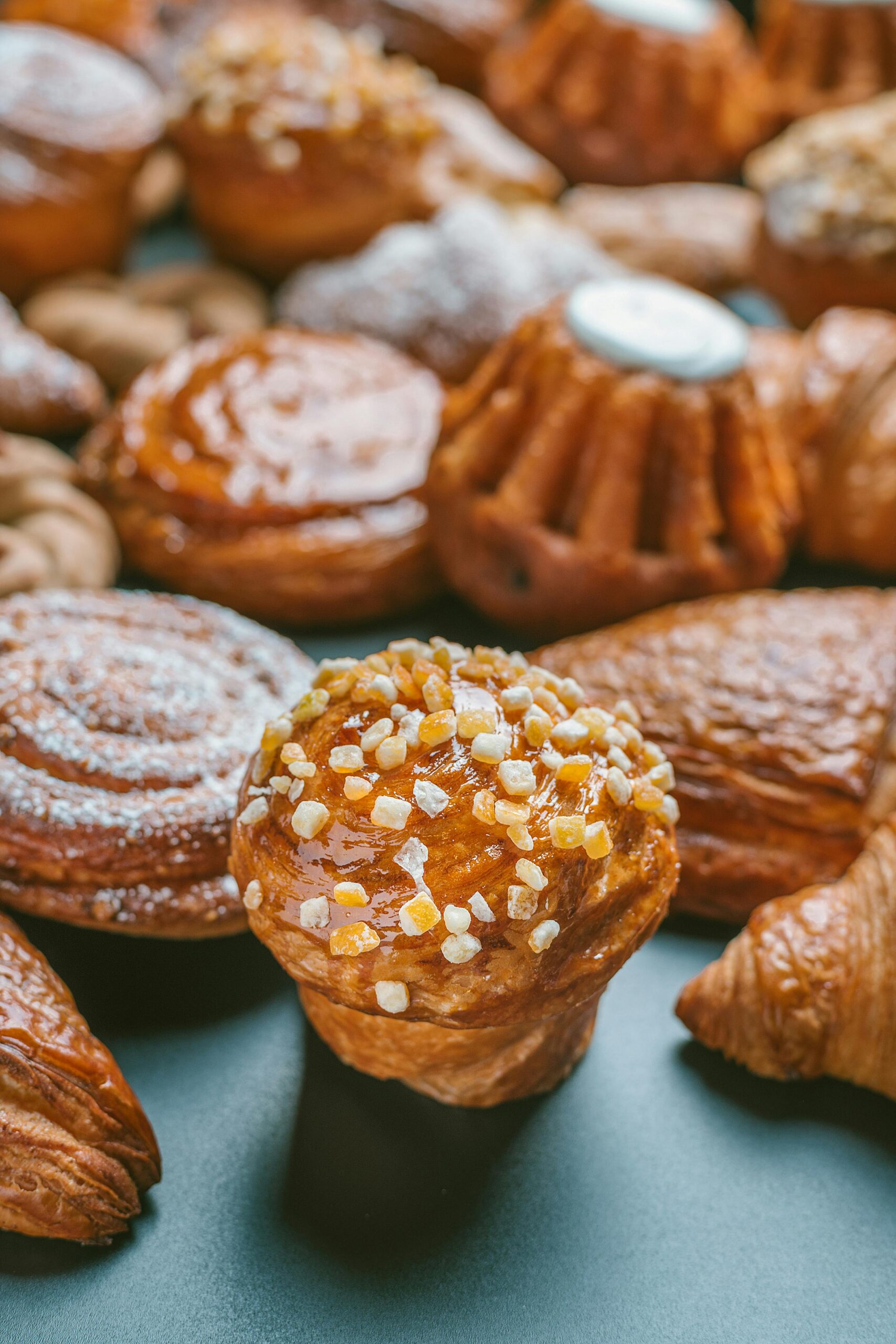

This post will review the general rules to pastry-making. When baking, there are certain considerations you should prioritize to have good pastries. These influence the texture, consistency and appearance of your pastries. The different pastries are made using different methods, which we will discuss too.
When baking , you should take into account several factors that affect how your pastry will form i.e. the tools you use, the speed you mix your ingredients, the ingredients you use, your hand movements whether in circular motion, side by side or back and forth.
Rules For Making Pastries
- Sifting is always important to remove and dirt particles and lumps. First, sift the flour before you add other ingredients.
- During mixing, ensure that you use the correct amounts of liquid. Also measure your ingredients accurately to obtain proper consistency and the desired flavour.
- Mix ingredients gently-Vigorous mixing causes flakiness therefore while you should mix quickly, don’t over-do it.
- Use the correct ingredients-Use the correct ingredients for the intended pastry. For example , whereas baking flour and yeast are both raising agents, using either for the wrong product and you’ll end up making a different product. For example using baking flour in bread instead of yeast will produce a different product .
- Allow resting time-After mixing the ingredients, allow the dough to rest. This is to allow for rising if yeast is present and for the dough to easily stretch.
- Use correct oven temperatures-so that the pastry cooks uniformly.
What To Avoid When Baking Pastries
- Using too much liquid
- Mixing ingredients vigorously
- Using excess fat or too little fat
- Inadequate mixing
- Using too much flour
- Using incorrect oven temperatures
Baking Techniques
The creaming method is used mainly when baking cookies and cakes, where you mix sugar and fat together before adding eggs, then the dry ingredients and liquids. When mixing the fat and sugar, bubbles are produced. You add a raising agent and later one egg at a time. This method creates fluffy cakes.
The rubbing-in method is utilized in the making of plain baked goods that contain little fat e.g. scones. The fat is added into flour and then rubbed into it using your fingers till the mixture appears as breadcrumbs, then dry ingredients are added followed by liquids.
The whisking method is also used in baking where a whisk is utilized to beat ingredients to allow air incorporation creating a smooth-textured product. The whisking method aims to form a sponge-like product while the creaming method aims to form a product with a firmer structure. It involves making side to side motions to cause agitation of ingredients, and hence the incorporation of air.
The folding method allows you to form light-textured and fluffy baked goods, where you use a spatula to scoop the batter over gently from the bottom as though your over-turning it. This method allows the forming of baked goods such as swiss rolls, and souffles
The melting method –You melt the fat, then pour it over other ingredients and mix until well-combined. Used in making baked products such as ginger cakes, brownies and fruit cakes.
To make good pastries, you must use the correct ingredients in their correct proportions, mix them gently and allow resting time before baking at correct oven temparatures. There are various baking techniques each used to produce different baking items.