
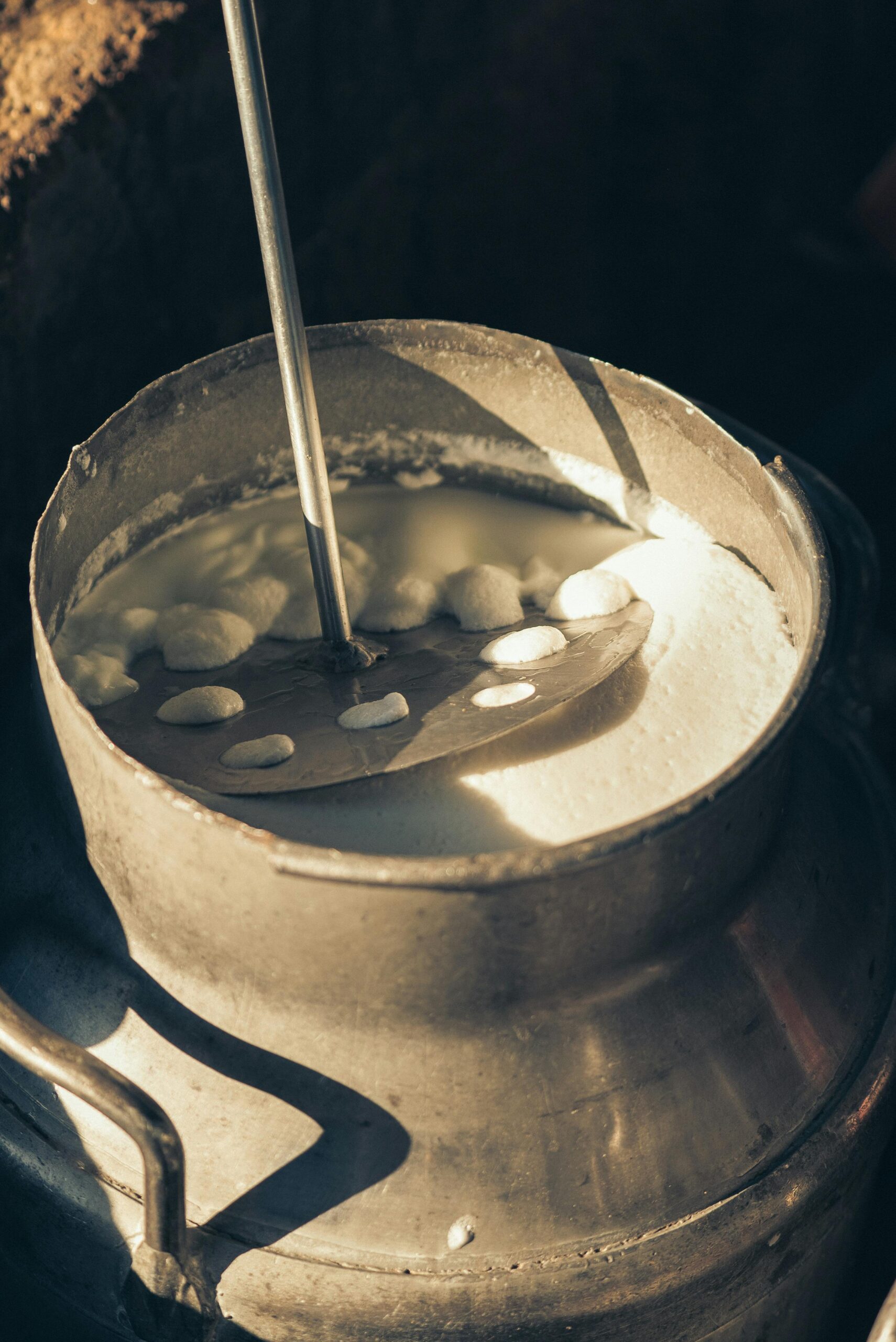

In this post , we will focus on the various milk processing methods , and understand their critical role in ensuring milk quality.
First , we should identify the different types of milk which are usually made trough either of the processes will discuss.
- Normal milk-this is cows milk that has not undergone any processing. It contains all milk components and full cream. Has about 3.8% fat content.
- Semi-skimmed milk– A portion of fat is extracted from it. Essentially , it contains about 2% of fats.
- Skimmed milk- Most of the fat is removed from it with about 0.5% of fats.
- Powdered milk-it is dried milk where milk is evaporated until it is dry.
- Evaporated milk– the water in milk-about 60% is removed from it.
- Condensed milk-It is evaporated milk which contains added.
Milk Processing
Milk and milk products undergo a range of processes to accomplish certain properties necessary after treatment. During milk processing, various intricate reaction systems either physically, chemically or bio-chemically are involved. These alterations are significant in changing certain attributes of milk like nutritional value, taste, shelf-life etc.
Homogenization -breaks down larger fat globules into smaller ones. Milk is forced through a homogenizer-breaks down fat globules. This milk processing method stabilizes fat emulsions. It aims to disintegrate fat globules contained in milk, to decrease creaming by lessening the propensity of globules to coalesce.
Pasteurization-the heating of milk at temperatures of 63°C for 30 minutes, followed by instant cooling. Alternatively, heating can be applied at higher temperatures of 72°C but for a shorter time -15 seconds. Raw milk undergoes pasteurization to destroy most of the pathogenic microbial organisms. Even so, the pasteurized milk should be refrigerated to inhibit the development of other bacteria that may not have been destroyed by pasteurization.
Sterilization– Applied into 2 methods as either normal sterilization where milk is heated at temperatures of 115° for approximately 20 minutes or ultra-high temperature (UHT) milk), where heating takes place at temperatures between 135° C and 150°C for 4-5 seconds. This processing method destroys enzymatic and micro-organism activity. UHT is applied with aim of storing milk for long periods of about 6 months.
Isolation of valuable components (e.g.,casein whey proteins, ) -It involves the extraction of either milk component to achieve the desired milk quality i.e. fat is removed from milk to form skim milk or the removal of lactose to form lactose-free milk.
Conversion to other forms (e.g., yoghurt, cheese, ).This may involve a combination of the mentioned milk processing methods such as pasteurization, homogenization etc in a addition to additional processes such as fermentation. For example, yoghurt involves the pasteurization of milk which is followed by fermentation where starter cultures are introduced. Cheese production involves various processes such as acidification, curdling where curd is dissociated from whey , salting, re-moulding and ripening.
There are various milk processing methods all of which are important in preserving milk. Most of the methods aim to inhibit microbial activity, and to extend shelf-life. Other methods lead to the formation of products and changes in flavour and nutritional value.